Processing's Weekly Mixer: Why industrial AI success starts with process stability, not prediction, and more

Welcome to the latest installment of Processing's Weekly Mixer, which highlights recent content from EndeavorB2B brands relevant to process manufacturers.
This week's entry features content from Control, Chemical Processing, Plant Services and Automation World, as well as this week's content from Processing.

Why industrial AI success starts with process stability, not prediction
From Control: Why establishing stable operations, dynamic centerlining and a trusted data foundation is the critical first step toward AI-driven quality optimization.
Len Vermillion writes:
Nearly every plant manager has heard a pitch for an artificial intelligence (AI) system that promises to predict quality metrics, catch downtime before it happens or squeeze another point of yield out of a line. However, fewer have seen those systems survive once they hit the plant floor.
The gap between the pitch and the plant is usually the result of a recommendation engine being only as useful as the operator's willingness to act on what it says. But operators don't act on advice they don't trust, and in a process environment, trust is built on stability.
When a line moves from setpoint to setpoint depending on who's running the shift, when centerlines are frozen numbers pulled from a binder nobody has updated in years, and when the data behind a recommendation is stitched together by hand, an AI model's output looks like noise. Confidence stalls, and so does adoption.
That's the case TwinThread is making to manufacturers evaluating industrial AI in 2026: don't reach for the most advanced use case first. Instead, the industrial AI and digital twin software company aims to address process variability with AI first and then bring in more advanced optimization as production stabilizes.
“Improving industrial data and scoping Industrial AI can happen in tandem,” says Brandon Ekberg, TwinThread’s VP of Product Management. “While TwinThread automates much of the data foundation work, teams can identify and validate viable use cases for Industrial AI. Once the data is integrated and the use case is vetted, pre-built solutions help customers move as quickly as they’d like.”
Read the entire article HERE.

Podcast: Reverse osmosis — when it's time to ditch the softener
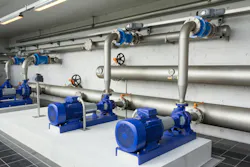
Low-flow, high-head pump selection: Factors that affect operation and equipment reliability
Jose Gutierrez, executive director of engineered products at ITT Goulds Pumps, has spent more than four decades working with pump applications. He cautions engineers to begin by understanding the operating conditions, rather than simply selecting equipment based on the required duty point. Gutierrez sat down with Anna Townshend, Plant Services chief editor, to discuss pump options and how to select the right pump for a low-flow, high-head application.
Read the Q&A HERE.

The control engineering skills that matter more as AI capabilities expand
Most of what I've written recently has been about where the software and logic processing hardware in our industry is headed. Software-defined automation, software engineering concepts like object-oriented programming and DevOps applied to industrial automation, and virtual PLCs running in IT-managed stacks.
More of what used to be determined by hardware will be handled in software, and controls workflows will increasingly resemble the ones software teams have used for years. It's tempting to read that as controls engineers needing to become software engineers, or completely obsolete, but the core controls engineering skill set isn't going anywhere. If anything, it's about to become more valuable.
Modern tools reduce the cost of producing logic, but they don't solve the harder part of the work, which is understanding a complex machine or automated process well enough to decide what that logic should do. They don't lower the cost of being wrong about the physical process, which has real implications for safety, business operations, and maintenance risk. When writing machine logic becomes faster, the bottleneck shifts toward engineering judgment.

Recapping the week on Processing
Articles
Labor, food safety and efficiency drive processing equipment investment
Practical factors behind better optical sorting
Pack Expo International 2026 Preview: METTLER TOLEDO Product Inspection Group
Application Corner: Starting and finishing
Quiz Corner: Reynolds number
Flow measurement: Driving sustainability with data-driven precision
Previewing Pack Expo International 2026 with Rob DeHaan of Hapman
Podcast
What PACK EXPO exhibitors are saying about the challenges facing processors in 2026
Industry News
Study: More than a third of industrial organizations see cybersecurity risk as a top obstacle to growth
Moleaer patents nanobubble process to improve wastewater polymer performance
CIRCOR to showcase Zenith Pumps at PACK EXPO International 2026
Euclid Chemical names new president following Tom Gairing retirement
LEWA unifies hygienic pump technologies for food production