Processing's Weekly Mixer: What modernization really means for industrial automation, and more

Welcome to the latest installment of Processing's Weekly Mixer, which highlights recent content from EndeavorB2B brands relevant to process manufacturers.
This week's entry features content from Automation World, Control, Food Processing, Plant Services and Chemical Processing, as well as this week's content from Processing.

What modernization really means for industrial automation
Industrial facilities rarely get the luxury of starting over. Control systems evolve over years or decades as equipment is added, processes change, production requirements grow, and new technologies become available. The result is often an automation environment made up of different generations of PLCs, instrumentation, communications, software, and equipment from multiple manufacturers.
At the same time, expectations for those systems continue to change. Operations teams want better visibility into what is happening across a facility. Maintenance teams need better information for troubleshooting. Organizations want access to data that historically remained inside individual machines or control systems. Increased connectivity also introduces new considerations for network architecture, remote access, and cybersecurity.
That tension between existing infrastructure and changing operational requirements is driving much of today's automation modernization. But modernization does not necessarily mean replacing everything that is old. In many cases, the more important question is whether the existing automation environment can continue to support what the operation needs it to do.

Tianxin Pharmaceutical: Rebuilding with a focus on Ethernet APL and HART-IP
From Control: In this episode of Control Amplified, editor in chief Len Vermillion shared his thoughts on this year's Plant of the Year honoree, selected by FieldComm Group: Tianxin Pharmaceutical's Jiangxi Leping Factory. Tianxin Pharamceutical modernized field connectivity at its factory by pairing Ethernet-APL with HART-IP, leading to shortened commissioning schedules by three to five months and completed process changes in one or two days.
Listen the the episode below.
Energy, emissions, regenerative ag drive sustainability
It’s starting to sound like a broken record, but food & beverage companies continue to make it clear that sustainability initiatives remain important to processors across the board, no matter which way the government and/or popular opinion slants. Simply put, being a good corporate citizen and taking care of the environment are still a priority, even for companies who appear to have taken a step back on some programs in the past year.
Take global protein behemoth JBS, for example. In July, much ado was made about the Brazilian company abandoning its goal to be net-zero on greenhouse gas (GHG) emissions by 2040. A setback for friends of the environment, certainly, but reading more deeply, JBS did not give up on reducing its GHG emissions outright. It simply shifted its strategy, concentrating on cutting Scope 1 and Scope 2 emissions, and less so on supply chain-centric Scope 3 emissions.
And that’s the underlying message: It’s wonderful to shoot for the stars with sustainability goals, but for the larger companies in the industry, making even moderate changes can make a big difference.
“In large part, sustainability projects help the bottom line too: There's an ecosystem reason to be sustainable, but there's also a financial reason as well,” explains Ben Hildebrand, director of Environmental Sustainability at Perdue Farms, whose Lewiston, N.C., plant won Food Processing’s 2026 Green Plant of the Year award. “Being wasteful in either way is not prudent.”
Ask a Plant Manager: Is your plant ready for a holiday shutdown?
From Plant Services:
Welcome to Ask a Plant Manager, the series where we put common maintenance and reliability assumptions to the test. Join Plant Services columnist and retired plant manager Joe Kuhn as he tackles the questions, rules of thumb and conventional wisdom that plant managers and maintenance leaders encounter every day. You'll get practical, straight-talking advice on what holds up in the real world.
In this episode, Joe Kuhn and Plant Services Chief Editor Anna Townshend are talking about holiday shutdowns, how to plan them, the common reasons shutdown take longer than expected, and scheduling and morale during the holidays.
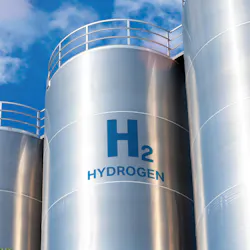
Is your infrastructure ready for hydrogen?
Hydrogen is having a moment.
Admittedly, that might sound like a familiar refrain. In his 2002 book The Hydrogen Economy, Jeremy Rifkin envisioned a new hydrogen-powered energy era that would usher in “the next great economic revolution.” Two decades later, former Chemical Processing columnist Alan Rossiter posed the question, “Is Hydrogen the Wonder Fuel?”
Today, global efforts to hit decarbonization targets have renewed interest in hydrogen as a potential energy carrier and alternative fuel. While it has a long history in petroleum refining and chemical processing — primarily as a reactant — hydrogen is being explored for a broader range of applications, from fuel cells to industrial heating to energy storage.
Hydrogen has a lot working in its favor. Perched atop the Periodic Table of the Elements, hydrogen is the lightest element in the universe — and the most abundant. It’s also the simplest element, readily bonding with many other elements.
“Hydrogen’s high-bonding potential makes it the key building block of many items that surround us, from soap and shampoo to paints and building materials and the plastics and packaging we use daily,” the Rocky Mountain Institute explained in a recent article, “How Hydrogen Could Clean Up the Chemicals Industry.”