Processing's Weekly Mixer: How AI, robotics are changing industrial maintenance and inspection, and more

Welcome to the latest installment of Processing's Weekly Mixer, which highlights recent content from EndeavorB2B brands relevant to process manufacturers.
This week's entry features content from Plant Services, Pharma Manufacturing, Control, and Chemical Processing, as well as this week's content from Processing.
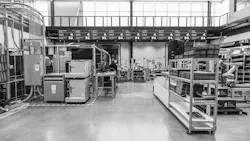
How AI and robotics are changing industrial maintenance and inspection
AI use in industry is on everyone’s minds. How will it help? What will it change? Will it solve the perpetual problem of the skills gap, or accelerate a loss of institutional skills? Deloitte’s recent AI Institute report, The AI Dossier, breaks down AI use cases for physical assets, infrastructure, employee safety and more. Plant Services spoke with Tim Gaus, principal at Deloitte Consulting, about the report’s findings on the role of AI in predictive maintenance and quality control.
A quick definition: AI in the report refers to “machine learning, deep learning, large language models and agentic, even physical AI,” Gaus says. Establishing a definition is important, since AI use can mean anything from autonomous robots to using Claude to try to tackle a thorny engineering problem during your lunch break.
Read the entire article HERE.

Can pharma manufacturers realize AI's potential?
From Pharma Manufacturing: Life sciences manufacturers are cautiously optimistic about the potential for emerging technologies like AI, robotics and automation to improve manufacturing operations. While many manufacturers anticipate that these technologies will drive greater operational efficiencies and lower the cost of goods, concerns still remain about affordability, integration into regulated manufacturing environments — particularly for AI — and what these technologies mean for the future of the workforce.
This episode of Off Script continues PM's series exploring findings from CRB's Horizons: Life Sciences 2026 report. We spoke with Niranjan Kulkarni, PhD, senior director of consulting services, and Matt Edwards, director of digital innovation, who co-authored a section of the report that explores the role of technology and people in life sciences manufacturing.
The conversation explored why some manufacturers are expecting emerging technologies to increase costs, the challenges of implementing AI in regulated manufacturing, and how manufacturers can prepare their workforces for responsible AI adoption while maintaining human oversight.
Listen to the episode below.

What do our factories know that we don’t?
Every process facility has a memory. The problem is that much of it has been difficult to access. That raises an important question: What does the plant know that operators don’t know?
For decades, facilities have recorded enormous amounts of operational information. Pressure changes, equipment failures, maintenance decisions, production conditions and operator interventions all leave a trail across thousands of shifts and production runs.
But that history is scattered across systems that often do not talk to one another. Some data is structured, such as time-series readings, alarms and maintenance records. Some are unstructured, including shift notes, work orders and operator observations. Experienced operators and engineers provide the context connecting these sources, drawing on years of practical knowledge to recognize relationships between them.
As a result, an operator dealing with a problem today may have no practical way to know that similar conditions occurred years ago, what happened next or how someone responded. Artificial intelligence (AI) now enables us to connect that operational history to what is happening now.

Remote cooling system failures are rarely sudden
From Chemical Processing: In the latest episode of the Distilled podcast, Traci Purdum talks with water treatment expert Brad Buecker about the hidden risks of remote cooling systems scattered around large plants.
Buecker explains how scale formation and microbiological fouling quietly degrade heat transfer, why cooling towers concentrate impurities and complicate chemistry, and why monthly vendor visits often aren't enough. He stresses online instrumentation, reliable biocide feed and trained staff who act on data. Buecker also shares cautionary tales, including a boiler kept online to earn $30,000 that required more than $2 million in repairs, and his family's connection to Legionnaires' disease.
Listen to the episode below.
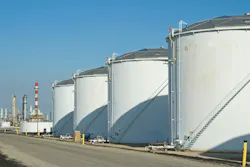
Ultimate strength: Guarding against fracture and collapse
Safety and reliability are key factors in the design of equipment for modern plants. Plant designers and operators must balance the need for cost-effective, compact, lightweight equipment against the demand for rugged machinery that can withstand harsh process conditions.
The following discussion offers rules and guidelines for assessing ultimate strength and for guarding against failure, fracture and collapse in mechanical equipment, piping, machinery assemblies and facilities. These rules and guidelines apply to a wide range of equipment, including fixed equipment, vessels, drums, storage tanks, heat exchangers, filters, towers, reactors and piping systems.