Processing's Weekly Mixer: How visual intelligence is reshaping chemical operations, and more
Welcome to the latest installment of Processing's Weekly Mixer, which highlights recent content from EndeavorB2B brands relevant to process manufacturers.
This week's entry features content from Automation World, Pharma Manufacturing, Control Design, Plant Services and IndustryWeek, as well as this week's content from Processing.
How visual intelligence is reshaping chemical operations
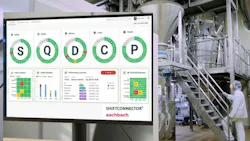
From Automation World: Visual intelligence combines real-time dashboards with AI-powered insights to help operations teams turn fragmented data into faster, safer decisions.
eschbach founder and CEO Andreas Eschbach writes.
Here’s a common chemical plant scenario: A night shift operator notices unusual vibration in compressor 3B. It's nothing that trips an alarm but it’s noticeable enough to mention in the shift log.
The day shift supervisor scans these handwritten notes during morning rounds but doesn't flag it for immediate action. Two weeks later, the compressor fails during peak production, triggering an unplanned shutdown that costs the plant in lost production and emergency repairs.
This wasn't a failure of diligence or expertise. It was a failure of visibility.
Chemical plants run on continuous processes managed by sophisticated control systems: distributed control systems (DCS), supervisory control and data acquisition (SCADA) and historians that capture thousands of process variables every second. Critical information that often matters most, such as a subtle observation or a recurring anomaly or the context that explains why a deviation happened is often contained in shift notes, maintenance logs and verbal handovers.
When that knowledge stays trapped in silos, even the most capable teams are flying blind.
Amid all the ongoing discussions about industrial data, it’s clear that what industry needs most is visual intelligence powered by an intelligent operations platform (IOP) that unifies operational data, contextual insights and human observations into a single, intuitive view. By connecting roles, shifts, and systems, an IOP ensures that critical signals are never lost and decisions are made with full visibility.

Thermo Fisher continues to invest in pharma services capabilities in 2026

Podcast: Drive technology — servo motors, inverters and more
From Control Design: In the most recent episode of the Control Intelligence podcast, editor in chief Mike Bacidore speaks with Mark Arisman, manager of business development for control products at Nord Drivesystems, about Nord's advancements in drive technology and the digital twin.
Listen to the episode below.

How to use OEE and TEEP to calculate plant losses

Edge AI in predictive maintenance: A look at workflows, challenges and outcomes

Recapping the week on Processing
Articles
How predictive maintenance reduces unplanned downtime in processing plants
AI built for the realities of industrial operations
Doing more with less: How pilot-scale innovation moves the needle
Application Corner: Ideal flowmeters (Part 1)
Quiz Corner: Flowmeter resolution
Podcast
Industrial photography with German Simonson
News
METTLER TOLEDO to showcase pharmaceutical inspection systems at Interphex 2026
Qlar opens pneumatic conveying test center in Bangalore, India
Compass Wire Cloth acquires Sefar screening division in Georgia
Motion Industries targets growth in Mexico with new service centers in Puebla, Coahuila
Sterling Engineering acquires Absolute Machine Control Technologies
Kemira completes first US chlorine-free wastewater treatment trial
New Products
MicroPure Filtration introduces pre-packaged steam manifolds
Belt conveyor dust collection system targets transfer point emissions