Processing's Weekly Mixer: How plants turn a reliability strategy into measurable results, and more
Welcome to the latest installment of Processing's Weekly Mixer, which highlights recent content from EndeavorB2B brands relevant to process manufacturers.
This week's entry features content from Plant Services, Chemical Processing and Pharma Manufacturing, as well as this week's content from Processing.
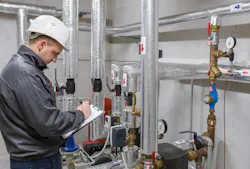
Leading maintenance execution: How plants turn a reliability strategy into measurable results
From Plant Services: Strong reliability cultures are built through ownership, audits, and disciplined follow-through, not slogans or training alone.
Author Joe Kuhn writes:
Reliability and maintenance best practices all matter, but none of them will move the needle unless the culture demands execution. That is the elephant in the room.
Most plants already know what good looks like. What they lack is the discipline to assign ownership, challenge excuses, inspect results, and hold the line when conditions get tough.
Reliability is not built by what a plant knows. It is built by what a plant is willing to execute day after day.
Read the entire article HERE.

Leading safely in a VUCA world
From Chemical Processing: When economic pressures mount, safety vigilance can quietly erode — and that's when incidents happen. In the latest episode of Process Safety with Trish and Traci, process safety expert Trish Kerin introduces APTBED, a practical decision-making framework for navigating volatile, uncertain, complex and ambiguous times.
The acronym covers six critical areas: Authority (know who's in charge), Psychological Safety (create space for honest information), Tacit and Explicit Knowledge (bring all knowledge into the room), Biases (recognize and manage cognitive blind spots), Expectations (manage them or people will fill the void), and Document Decisions (if it's not written down, it never happened). Good decisions and strong safety culture aren't mutually exclusive — even in a crisis.
Listen to the episode below.
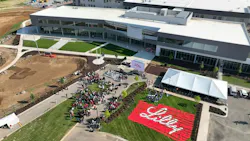
Eli Lilly scales global manufacturing with learn once, deploy everywhere approach
From Pharma Manufacturing: To grow its worldwide network, Lilly decided to scale its production sites with standardization, drawing upon lessons learned from its existing plant sites.
Greg Slabodkin writes:
With a commitment of more than $55 billion globally since 2020, Eli Lilly has made a concerted effort to scale its manufacturing operations worldwide using a “learn once, deploy everywhere” approach to ensure the drugmaker is scaling with a focus on standardization.
Over the past six years, Lilly has been building new multibillion-dollar production facilities designed to scale through “disciplined” replication, according to Dan VonDielingen, senior vice president of global parenteral network expansion.
VonDielingen, who is responsible for Lilly’s start-up and ramp of new parenteral sites, told an audience on Tuesday at the INTERPHEX conference in New York City that the company is expanding manufacturing capacity to meet growing global demand for its drugs — including the wildly popular GLP-1 class of medications.
In the U.S., no pharmaceutical company is spending more on its GLP-1 manufacturing infrastructure than Lilly. In 2025, the drugmaker pledged $27 billion to build four new domestic pharmaceutical manufacturing sites — three for active pharmaceutical ingredients (APIs) and one to manufacture parenteral (injectable) products and devices.
VonDielingen credited CEO Dave Ricks and Lilly senior leadership for making “big bets” on where the company wanted to make its medicines. Since 2020, Lilly’s U.S. capital expansion commitments have totaled more than $50 billion, which is meant to enhance production effectiveness and efficiency through automation and digital transformation.
“We believe that platform consistency equals speed,” VonDielingen said. “Speed doesn’t just mean moving faster. The fastest way that you can get things done is to do things right the first time. We’re really focused on using automation technology and robotics to remove variability.”
Read the entire article HERE.
How U.S. policy is reshaping pharma outsourcing
From Pharma Manufacturing: As the U.S. government pushes to reshore pharmaceutical manufacturing and rein in drug pricing, the implications for CDMOs and the broader outsourcing ecosystem are coming into sharper focus. While large-scale onshoring investments dominate headlines, questions remain around how policy will account for outsourced manufacturing and whether incentives align with the realities of global supply chains.
In the latest episode of Off Script, Pharma Manufacturing spoke with Gil Roth, founder and president of the Pharma & Biopharma Outsourcing Association (PBOA), about how recent policy developments are impacting CDMOs and their customers. The conversation explores the role of CDMOs in onshoring efforts, the economic and structural barriers to reshoring API and generic drug manufacturing, and what current tariff frameworks signal about policy priorities. Roth also discusses FDA staffing challenges, potential impacts on drug review timelines, and the broader uncertainty shaping R&D, sourcing, and investment decisions across the industry.
Listen to the episode below.

Recapping the week on Processing
Articles
Turning produced water into a reliable resource
From insight to execution: Why industrial AI’s next breakthrough will happen on the plant floor
Ask a Powder Pro: What is the most challenging powder that you have ever experienced?
From filters to bearings: Building a smarter air compressor maintenance strategy
Dust collection system design depends on proper transport velocity selection
Podcast
Fluidized bed design and operation with Ray Cocco
In the latest episode of Ear on Processing, consultant and lecturer Ray Cocco discusses his new book, Fluidization Processes: Design and Operation. Listen to the episode below.