Processing's Weekly Mixer: How candy, chocolate product innovation is driving process advancement, and more
A compilation of recent coverage related to the process industries from across EndeavorB2B brands.

Welcome to the latest installment of Processing's Weekly Mixer, which highlights recent content from EndeavorB2B brands relevant to process manufacturers.

This week's entry features content from Food Processing, Automation World, Pharma Manufacturing and Control Design, as well as this week's content from Processing.
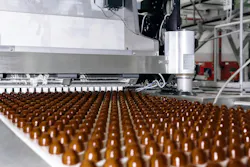


Candy, chocolate product innovation drives process advancement

From Food Processing: Consumers continue to crave candy and confectionery products, and companies are using new technologies to target their ultimate desires and further improve product lines to meet those demands.

Andy Hanacek writes:

Candy and confectionery companies continue to find ways to innovate their product lines today, and what drives operations typically is a desire to find candy and chocolate products that consumers view as cutting-edge, unique and fun.

“These days, innovation itself is evolving in the confectionery industry,” explains Carly Schildhaus, director of public affairs & communications at the National Confectioners Assn. (NCA). “Brands are exploring new textures, formats, and limited-time offerings to keep candy relevant and growing, while technology is opening new ways to connect with people.”

According to the NCA’s 2026 State of Treating report, confectionery sales reached $55 billion in 2025 and are expected to top $62 billion by 2030. And while many feared the impact that the rise in the adoption of GLP-1 drugs would have on treats like candy and chocolate, Swiss chocolate company Lindt & Spruengli revealed data in March that showed increased consumption of chocolate among GLP-1 users in the U.S. Sales of premium chocolate increased among GLP-1 users by nearly 17% in 2025, compared to a ‌6.5% ⁠rise among non-GLP-1 users, the company noted in a Reuters report this spring.

Candy companies are moving to take advantage. Chocolate and candy remain important to U.S. consumers overall. With people eating candy two to three times per week, adding an average of 40 calories and about one teaspoon of added sugar per day, candy and confections companies see the popularity of their products but know that balance is important.

“Confectionery manufacturers are offering more variety in pack sizes and portion options than ever before, while reminding consumers that candy is a treat, not a meal replacement,” Schildhaus adds. “Companies of every size are shaping the category, with larger brands able to deliver at scale while smaller companies bring agility and fresh experimentation.”

Read the entire article HERE.



AI’s Future Impact: A Disconnect Between Manufacturers and Employees

Also from Food Processing: Randstad USA recently released its Workmonitor 2026 Report, and Christina Parker, senior vice president for the company, joined the Food For Thought podcast to dig into the results. The report covers numerous topics, and Parker discusses the sentiment on artificial intelligence in the manufacturing space, noting a disconnect between what employers and employees expect the impact to be over the next few years.

Furthermore, she details some of the communication and collaboration needed between employers and employees to properly manage expectations for the systems being implemented. AI has helped manufacturers of all types deal with the labor shortages of recent years, and Parker lays out some of the things employees are seeking today in the post-pandemic employment landscape.

Listen to the episode below.
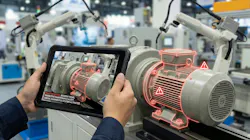
How modern drive technologies are solving industry’s toughest precision challenges
From Automation World: Industry experts from Beckhoff and Siemens reveal how smart diagnostics, digital twins and predictive maintenance are keeping industrial machinery accurate and downtime low.

Beth Stackpole writes:

Precision and reliability have long been gold standards in manufacturing, and in the era of higher precision products, that requirement has intensified. Automation World recently interviewed Chase Boehlke, presales specialist for servo drives at Siemens USA, and Matt Prellwitz, drive technology product manager for Beckhoff USA, to get their insights on the most promising technologies enabling tighter tolerances for drives and motion control systems while remaining cost effective and easy to maintain.

Read the Q&A HERE.


Delivering pharma’s mega-projects in a resource-constrained world: Part 1

From Pharma Manufacturing: Rising capital investment in pharmaceutical manufacturing is pushing projects to unprecedented scale, but execution strategies haven’t fully kept pace. As companies commit billions to new facilities, they’re encountering a new set of challenges around planning, coordination, and risk management. What worked for smaller, site-based upgrades is insufficient for multibillion-dollar builds involving thousands of stakeholders, constrained resources, and increasingly complex regional dynamics.

In the latest episode of Off Script, Pharma Manufacturing spoke with Pathfinder President Steve Cabano and Mark Christopher, vice president and head of the company's pharmaceutical division, about what it takes to successfully deliver mega-scale capital projects in today’s environment. Pathfinder is a project management consulting firm. The conversation explores how the industry’s shift back toward large-scale North American manufacturing is exposing gaps in project controls, contracting strategies, and organizational readiness. They discuss the growing importance of early-stage planning, clearer decision ownership, and construction-driven execution models, as well as how labor competition, permitting hurdles, utility constraints, and global procurement risks are reshaping timelines and cost structures.

Listen to the episode below.
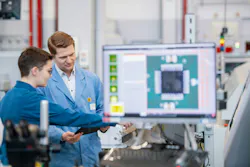
Creating the missing layer: Why orchestration is essential for industrial AI success

From Control Design: How to build a data-rich, action-driven foundation for trusted industrial AI.

Chris Stevens and Annemarie Breu of Siemens write:

Every conversation about AI’s role in manufacturing is dominated by the promise of smarter automation, a better prepared workforce and real-time adaptation. Yet a gap remains: trust.

When an AI makes a recommendation, a system generates an action, and, often between the algorithm and the assembly line, there is a breakdown because of the lack of guardrails, context and chain of accountability connecting insight to execution.

Deploying automation has always required confidence that the system will do what it's supposed to do, but introducing AI into that equation raises the stakes considerably. Bridging that gap requires an orchestration layer that closes the loop between AI-generated insight and action on the floor in a way that manufacturers can depend on.

Read the entire article HERE.



Recapping the week on Processing

Articles

Dust collection duct manifolding: Common errors and best practices

Proper duct manifold design ensures balanced airflow and consistent dust control performance.

Why O-ring design matters

Giving proper attention to a small component like an O-ring can make the difference between a successful product and a costly redesign.

From data silos to unified insight: The new reliability ecosystem for modern manufacturing

As plants face tighter margins, shrinking workforces and more complex assets, integrated reliability architectures powered by condition monitoring, edge analytics and AI-driven prescriptive maintenance are becoming essential to achieving resilient, high-performance operations.

From alarm floods to actionable alerts: A practical guide to alarm rationalization in process plants

By taking a structured, data-driven approach to alarm rationalization, incorporating secure remote monitoring strategies and treating alarm management as an ongoing lifecycle, facilities can turn alarm floods into actionable insight.

Ask a Powder Pro: When purchasing a bulk solids handling system, how do we define up-front project scope and performance requirements to avoid issues and costly change orders later?

Effective project planning involves defining clear goals, setting realistic priorities, and communicating these to suppliers.

Podcast

How interactive plant environments close the process manufacturing skills gap, with Emerson's Anthony Gentile

In this In Processing episode, the company's customer experience manager details how immersive, hands-on training accelerates workforce readiness, reduces risk and improves plant performance across global operations.

Listen to the episode below.

News

IMI opens process automation facility in Lake Forest, California

Flow control specialist IMI opens a purpose-built plant to serve oil, gas, and power industries.

American Chemistry Council announces 2026 Responsible Care award winners

Responsible Care awards highlight companies improving worker safety, environmental protection, and operational accountability.

NETZSCH Pumps USA showcases portfolio of oil industry pumps at Offshore Technology Conference 2026

Offshore Technology Conference 2026 attendees can explore NETZSCH Pumps USA systems designed for upstream, midstream, and downstream operations.

SOCMA announces new vice president of government relations

Javier Barajas Martínez brings more than 20 years of experience in government affairs and public policy with a proven track record of advancing complex policy initiatives.

Aquatech acquires FTS H2O to advance energy-efficient lithium processing, ZLD and brine mining

FTS H2O's headquarters in Oregon will become Aquatech's global Center of Excellence for membrane-driven brine concentration and resource recovery.

Australia and Japan strengthen critical minerals supply chain cooperation

Australia will provide up to $1.3 billion in support for critical minerals projects involving Japanese partners.

BEUMER Group highlights automated palletizing and stretch hood technologies at interpack 2026

Attendees can explore integrated palletizing, filling and packaging systems focused on throughput, uptime and efficiency.

Everstone Capital acquires Qlar Group from Blackstone

The acquisition positions Qlar to expand its aftermarket services and global customer support operations.

Schneider Electric joins World Economic Forum Lighthouse Operating System board

The Lighthouse Operating System introduces an open-source framework designed to guide manufacturers toward operational excellence and digital maturity.

New Products

Multiflux GMS mixers achieve homogeneous protein blends in 30 seconds

Low-dose protein blending capabilities allow Gericke mixers to maintain consistency below 0.01 percent inclusion rates.

Mobile bag dumping station improves dust control and operator safety

Flexicon introduces a bag dumping station with built-in dust collection and dual-cartridge filtration for cleaner operations.

R Series heat exchangers

The HRS R Series has been designed for situations where products are extremely viscous or need thorough mixing.

Mouvex expands G-FLO Series Eccentric Disc Pumps with higher temperature capability

Upgrade makes the G-FLO Series an ideal solution for high-temperature chemical applications.

Eriez launches X8-SF metal detector for food processing inspection

The X8-SF uses simultaneous frequency technology to reduce false rejects caused by product effect.

Emerson launches digital anti-coating pH/ORP sensor

Rosemount 396A maximizes sensor life while simplifying Modbus integration and speeding device changeout.

Sign up for our eNewsletters
Get the latest news and updates