Processing's Weekly Mixer: The two levels of advancement in F&B automation, and more
Welcome to the latest installment of Processing's Weekly Mixer, which highlights recent content from EndeavorB2B brands relevant to process manufacturers.
This week's entry features content from Food Processing, Pharma Manufacturing, Chemical Processing and Control, as well as this week's content from Processing.
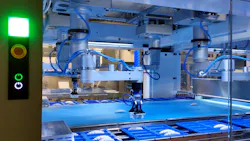
Food and beverage automation: Two levels of advancement
Over the last decade-plus, food and beverage processors have installed plenty of automation to help make their products faster, with top-line efficiency and a sharp focus on safety of both the product and the workforce. Still, various segments of the industry remain in the fledgling stages of reaping the benefits of these technologies.
In fact, it’s almost a tale of two cities, says Ozan Ozaskinli, partner and managing director for Value Gene Consulting Group.
“On the beverage side, there’s much more automation and robotics users — we see 80-85 percent of the process automated — because it is much easier to automate the beverage process,” he says. “On the food side, however, from automation perspective, it’s really lagging behind, with closer to an average of 10-15 percent of the processes truly automated.”
Mergers, layoffs and geopolitical risk reshape the chemical industry

FDA picks seven companies for PreCheck pilot program including two CDMOs
The U.S. Food and Drug Administration has announced the selection of seven companies to participate in its PreCheck pilot program as an initial cohort of new pharmaceutical manufacturing facilities.
Chosen from more than 80 applicants, the list of participants includes Big Pharma companies Eli Lilly and Regeneron Pharmaceuticals, as well as contract development and manufacturing organizations (CDMOs) Cellares and Fujifilm Biotechnologies. Other companies selected for the pilot program are Amneal Pharmaceuticals, Kriya Therapeutics, and Kyowa Kirin.
“The pilot program is intended to support the development of new U.S. pharmaceutical manufacturing facilities by encouraging earlier FDA engagement and providing a more predictable regulatory pathway for companies that plan to manufacture drugs for the U.S. market, helping support greater access to critical medicines for Americans,” according to the agency’s announcement.
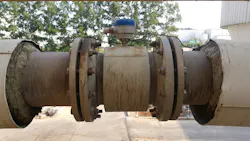
Large pipe flow measurement: large sensors or small meters?
Flow measurement in large pipes presents a challenge for many types of flowmeters. Coriolis meters become heavier, more unwieldy, and more expensive as the line sizes they are measuring increase.
Vortex meters face similar issues. As line sizes increase, bluff bodies grow larger and vortex shedding frequencies decrease. Ultrasonic meters do better as line sizes increase, but large acoustic path lengths may weaken the signal. Both clamp-on and insertion ultrasonic meters address the issue of line size, but their performance does not typically rise to the level of inline meters.