Processing's Weekly Mixer: Mixing/blending operations stay nimble as formulations change, and more
Welcome to the latest installment of Processing's Weekly Mixer, which highlights recent content from EndeavorB2B brands relevant to process manufacturers.
This week's entry features content from Food Processing, Plant Services, Control Design and Pharma Manufacturing, as well as this week's content from Processing.
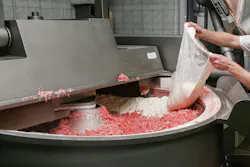
Mixing, blending operations stay nimble as formulations change
The act of mixing and blending ingredients into batches and then into product is a time-tested process found in a wide swath of food & beverage processing plants. Yet even though processors have been mixing and blending things together seemingly for eons, the operation doesn’t come without challenges.
Product developers tinker and formulations evolve, which means processing plants must stay nimble. As recipes change, mixing and blending operations need to keep up.
Consider, for example, the efforts of numerous companies to remove artificial colors from their products. It offers a particularly relevant example of how it often isn’t as easy as swapping one ingredient for another, says Bhavna Ramani, chief R&D and production officer at PIM Brands, which recently reformulated its entire Welch’s Fruit Snacks product line to remove artificial dyes.
“As many manufacturers navigate the transition to natural colors, the complexity often lies not in the color source itself, but in how it mixes and blends within a specific product,” Ramani explains. “Since our snacks are made with whole fruit, the natural acidity of each fruit can influence color appearance and stability over time.”

Execution latency: The hidden (but measurable) cost eating plant margins
When a frontline technician identifies a problem, it kicks off a series of events. They communicate the problem, someone identifies a solution, and that solution gets implemented. The longer the gap between problem identification and solution implementation, the greater the cost to industrial plants and manufacturing organizations. We call this gap “execution latency.”
It’s a frustrating problem, often because industrial leaders aren’t trained to look for it. And it can show up even after organizations have made investments in improving both IT and OT.
I’ll walk you through what you need to know to spot execution latency in your organization and do the work necessary to eliminate it to preserve margins.

Top 20 practices for securing PLCs from cyberthreats
Raghunathan is also co-chair of the PLC Security Top 20 List. In this interview, he outlines how the PLC Security Top 20 List addresses programmable logic controller (PLC) vulnerabilities by offering practical, engineering-focused guidance across the hardware lifecycle.

Catalent taps AI to change quality management in pharma manufacturing
As a growing range of complex therapeutic modalities enables the treatment of previously incurable diseases, quality management systems have had to evolve alongside pharmaceutical manufacturing to support these therapies.
Quality teams manage increasingly large and complex volumes of data tied to advanced therapies — while also navigating evolving regulatory expectations — and new quality management solutions are emerging to support them in their workflows, including artificial intelligence (AI)-based tools.
Global contract development and manufacturing organization (CDMO) Catalent is among the manufacturers investing in AI for quality management, recently introducing Qai, an enterprise platform designed to support quality system processes across its manufacturing network.
According to the CDMO, Qai is the first AI enterprise solution launched at Catalent which strengthens “quality management system processes — such as deviations and complaints — by harnessing Catalent’s enterprise data to accelerate analysis, root cause identification and corrective and preventive action development, while improving consistency and speed.”