Processing's Weekly Mixer: Inside ExxonMobil’s live rollout of open process automation, and more

Welcome to the latest installment of Processing's Weekly Mixer, which highlights recent content from EndeavorB2B brands relevant to process manufacturers.
This week's entry features content from Control, Pharma Manufacturing, Plant Services and Chemical Processing, as well as this week's content from Processing.

Inside ExxonMobil’s live rollout of open process automation
Distributed control systems (DCS) that run chemical plants or refineries have traditionally been a closed box. They use one vendor’s hardware, one vendor’s software, and one vendor’s roadmap. That’s been going on for decades. At YNOW2026, Yokogawa’s User Conference & Exhibition, ExxonMobil Systems Engineer Toriano “Tito” Jackson stood in front of attendees and described what happens when a company decides to break that box open on a live production unit.
Jackson’s session Open Process Automation (OPA) in Practice: How We Modernized a Live Chemical Plant and What We Learned was less a product pitch than a field report. Jackson has spent 16 years as a control systems engineer at ExxonMobil facilities around Baton Rouge, La., the last four of them implementing and now maintaining an OPA system built in collaboration with Yokogawa. He was candid that the transition was not, in his words, "a cakewalk."
"I can talk about OPA and my experience all day long," Jackson told the audience. "But it wasn’t easy at first."
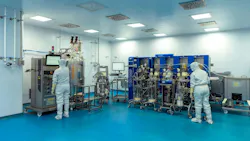
Continuous upstream bioprocessing makes headway in biomanufacturing
Automation technologies for bioprocessing are on the rise as automated batch control systems for bioreactors continue to make headway. That’s among the findings of BioPlan Associates’ 23rd Annual Report and Survey of Biopharmaceutical Manufacturing Capacity and Production.
Continuous upstream bioprocessing innovations remain a top interest as the industry grapples with operational issues in biomanufacturing and seeks improvements in their operations that lead to cost efficiency wherever possible. At the same time, operator errors are the most persistent cause of batch failures.
“This report clearly indicates that better automation and monitoring are in high demand from end-users. Part of this is due to the expectation that automation can remove human errors in bioprocessing,” states BioPlan. “The data show that equipment suppliers are increasingly focusing on automation and how it can be integrated into standardized design and processes.”
Ask a Plant Manager: When everyone owns reliability, who is accountable?
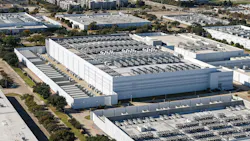
Data centers are coming for your power and water — Here's what a century of chemical plant experience says
David L. Russell writes:
A data center does not spring up in a vacuum. It draws power, water and community attention in the same neighborhoods that have hosted heavy industry for generations, and the chemical industry is one of the oldest and most instructive points of comparison. Chemical plants have spent over a century learning, sometimes the hard way, how to manage power demand, water chemistry, noise and air emissions while operating next door to homes and schools. This article compares data centers and chemical plants across four areas, in order: power demand and usage, water usage and chemistry problems, noise problems and air pollution problems.
There is a real difference between the two industries that is worth keeping in mind throughout. A chemical plant converts raw materials into a physical product, and much of the energy and water it uses ends up embodied in that product or is recovered as process steam. A data center converts electricity into computation, and essentially all of that electricity ends up as waste heat that must be rejected to the environment. That single difference explains much of why the two industries look similar on paper yet differ in the details.
Read the entire article HERE.