Processing's Weekly Mixer: Does your manufacturing data deserve your trust?

Welcome to the latest installment of Processing's Weekly Mixer, which highlights recent content from EndeavorB2B brands relevant to process manufacturers.
This week's entry features content from Automation World, Food Processing, Plant Services, Chemical Processing, and Control, as well as this week's content from Processing.

Does your manufacturing data deserve your trust?
As baseball fans are knee-deep in the World Series, teams are using mountains of data to gain every possible competitive advantage. Managers and coaches rely on statistics to help make critical decisions throughout the game.
Now imagine if a pitching coach was handed three different ERAs for the same pitcher. Which number would they trust? It sounds absurd in Major League Baseball, yet manufacturers regularly face similar situations when different systems report different versions of the same operational data.
Imagine walking into a morning production meeting and seeing three different numbers for the same metric. The dashboard shows one result, a spreadsheet from the plant floor shows another, and an engineer pulls a report that tells a slightly different story. Suddenly, the conversation isn't about improving production, reducing downtime, or increasing quality. It's about figuring out which number is actually correct.
For many manufacturers, this scenario feels all too familiar. Over the past decade, organizations have invested heavily in automation, connectivity, and digital transformation. Production equipment is generating more data than ever before, and information is flowing from sensors, control systems, historians, MES platforms, quality systems, and business applications. Yet despite having access to all this information, many companies still struggle with a surprisingly basic challenge: trusting the data they're using to make decisions.
The issue isn't that manufacturers lack data. In most cases, they have plenty of it. The challenge is determining whether that data is accurate, consistent, and reliable enough to support operational decisions. When confidence in data starts to fade, confidence in the decisions based on that data often fades right along with it.

Looking ahead at 2027 capital spending for food & beverage
Godet talked about the trends driving how food and beverage capex projects are developing and how companies feel heading into 2027. He also offered his thoughts on the types of projects his firm was seeing in the industry, and what processors should be thinking about in terms of capital spending as they plan for the 2027 calendar year.
Listen to the episode below.
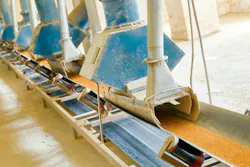
How vibration analysis and digital twin models help prevent downtime and grain dust explosions
I can clearly recall the exact moment our team realized that our traditional view of facility performance was dangerously flawed. We were sitting in the control room of a major Mountain West milling facility, conducting a post-mortem analysis on a recent railcar load-out. On paper, the facility appeared to be performing flawlessly. Our legacy supervisory control and data acquisition (SCADA) system showed the primary bucket elevator and shipping belts humming along with a 92% availability rate.
Yet, it just took us 12 hours to load a unit train that, based on our theoretical load-out capacity, should have taken eight.
Where did those four hours go? The manual logbooks and whiteboards that we used to coordinate truck unloads and bin routing offered no answers. Because the conveyor motors were energized and drawing power, the SCADA system recorded the equipment as “operational.” It was an illusion of efficiency. We were burning electricity, wearing down mechanical bearings and generating massive amounts of suspended dust, but we weren’t moving sellable products. That was the moment we realized that without a throughput-based, digital measurement system, we were flying blind not just financially, but from a safety perspective as well.
The agricultural commodity supply chain demands high-volume throughput, but that volume continuously generates a lethal by-product: highly combustible grain dust. High-volume handling generates massive particulate loads; empirical studies reveal that handling wheat generates 64.6 grams of total airborne dust per metric ton handled, while shelled corn generates an astonishing 185.1 grams per metric ton. At these mass flow generation rates, manual sweeping cannot mathematically keep pace. The realization that our belts were running empty also meant we were generating suspended dust and friction for absolutely no reason.

Before the storm hits: Closing gaps in chemical plant disaster planning
Atlantic hurricane season doesn’t officially end until Nov. 30. This season has been relatively quiet for the chemical sector, but past storms and other natural disasters have shown that facilities can face serious consequences when they aren’t prepared (see sidebar).
The threats are not going away, even if the Trump-led U.S. Environmental Protection Agency (EPA) administrator rolls back Risk Management Program requirements enacted under the Biden administration. The ruling included new emergency-planning mandates for extreme weather events due to climate change.
Past incidents related to extreme weather have led to fines, criminal charges, deaths and major plant disruptions.
Christina Baxter, CEO of Emergency Response TIPS, a company that develops tools and training for hazardous materials and CBRNE (chemical, biological, radiological, nuclear and high-yield explosives) response, says preparedness has to be built around cascading failures rather than isolated events. Chemical Processing recently asked Baxter five questions about vulnerabilities, planning gaps and practical steps.

Survey: AI delivers measurable value gains for control engineers
A recent poll of 300 engineers finds AI has moved from pilot to payoff. For control teams in industrial processing, the biggest gains are in the areas where time is hardest to find: testing, validation and iteration
The main takeaway for control engineering teams from the poll, conducted by SimScale, a Munich-based cloud-native, AI-native computer-aided engineering (CAE) software company, is that 92% of engineers see measurable value.
The poll, taken at the company’s Agentic Unlocks event, found respondents are getting measurable value from AI. Among those:
- 46% report faster engineering and development cycles;
- 39% report higher engineering productivity;
- 23% report reduced simulation or testing effort; and
- 15% say they are making better design decisions, and another 15% are exploring more design alternatives.
For control engineering teams, the testing and simulation figure matters most. Validating control strategies before they reach a live process is where schedules tend to slip, and it’s where nearly a quarter of respondents are already cutting effort.