Processing's Weekly Mixer: How industrial vision systems stay sharp on the factory floor, and more
Welcome to the latest installment of Processing's Weekly Mixer, which highlights recent content from EndeavorB2B brands relevant to process manufacturers.
This week's entry features content from Automation World, Pharma Manufacturing, Control and Plant Services, as well as this week's content from Processing.
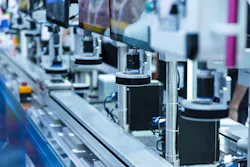
How industrial vision systems stay sharp on the factory floor
Fortunately, the industry has developed both technology and techniques for overcoming some of these limitations. To learn about some of them, Automation World spoke with John Sprinkle (JS), product engineer for safety and identification at AutomationDirect.
Read the Q&A HERE.
Pharma shift to biologics, away from small molecules impacts manufacturing
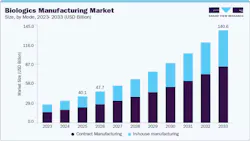
The pharmaceutical market is making a fundamental shift toward biologics, and away from small molecules, which will have profound implications for manufacturing over the coming decade. For the first time, biologics in development outnumber small molecules — according to Citeline’s Pharma R&D Annual Review 2026 — which describes the milestone as a tipping point for the industry.
Citeline noted a surge in the numbers of antibody-drug conjugates in development, which grew more than 30% over the 2025-2026 period. While monoclonal antibodies are expected to dominate the market, almost all subtypes of biologics are predicted to grow significantly over the next several years.
At Thermo Fisher’s 2026 Investor Day last month, CEO Marc Casper said the biomanufacturing market is strengthening due to reshoring trends, rising biotechnology investment, as well as growth in biologics and complex modalities.
“What you see is a larger focus on biologics versus small molecules,” Casper said. “Biologics are much more life science tools- and pharma services-intensive than small molecule. So that simple shift of what’s in the pipeline drives demand to our industry.”
Read the entire article HERE.

What happened at AspenTech's Optimize 26?
From Control: Fifteen months after its acquisition by Emerson, AspenTech’s biannual Optimize 26 event on May 11-14 in Houston had a definite Emersonian flavor. Its keynotes and presentations, panel discussions, technical sessions and exhibits retained AspenTech’s cornerstones of innovation, software development, talented personnel and customer focus, but this time they also paralleled the structure and style of Emerson Exchange events.
In the latest episode of Control Amplified, executive editor Jim Montague discusses what he saw at Optimize 26. Listen below.
Case study: Berentzen boosts bottling line efficiency with digital traceability and AI-driven production planning
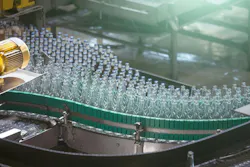
For beverage manufacturers managing complex packaging operations, delayed visibility into production losses can erode throughput and quality slowly. It’s difficult to notice day-to-day, until efficiency has dropped and no one knows why. Slow drift production losses don't appear all at once. They accumulate quietly until profitability starts to disappear. At the Minden, Germany bottling facility for Berentzen Group, a lack of transparency into the production line was making managing multiple packaging variants, smaller batch sizes, and increasingly complex production requirements even more challenging.
“The key trigger was missing line transparency in bottling, which led to productivity losses,” says Thomas Faust, head of operations at Berentzen. “If OEE drivers such as downtime, micro-stops, speed losses, and scrap are not captured cleanly and in a timely manner, problems are recognized too late and countermeasures take effect with delay.”
Berentzen Group operates across three core business segments: spirits, non-alcoholic beverages, and equipment for freshly pressed juice. Its operations include spirits bottling in Minden, Germany; non-alcoholic beverage production in Haselünne, Germany; and a central warehouse in Stadthagen connected to the Minden plant by rail. Through its Fresh Juice Systems equipment line (in Citrocasa in Linz, Austria), it also serves food service operators such as hotels and restaurants. Overall, the company bottles product for retailers, hospitality businesses, beverage and foodservice operators, and international distribution partners in both the branded and private-label markets.
Output was decreasing and unit costs were increasing, and the lack of visibility into production was affecting planning and traceability. To address these challenges, Berentzen undertook a broad digitalization initiative named Project “Mehrblick,” or “more insight.”