Processing's Weekly Mixer: Motors and drives offer a strategic edge, and more
Welcome to the latest installment of Processing's Weekly Mixer, which highlights recent content from EndeavorB2B brands relevant to process manufacturers.
This week's entry features content from Food Processing, Automation World, Pharma Manufacturing and Chemical Processing, as well as this week's content from Processing.
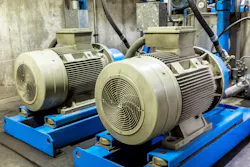
Can motors and drives offer a strategic edge?
With motors and drives found around almost every corner of any manufacturing plant, food & beverage processing companies continue to look for ways to pull value from these components without sacrificing efficiency, reliability or safety. And as stakeholders, executives and customers demand even more improvement, plant engineers and operators have had to look at the finest of details to make incremental advances.
As a result, processors look at motors and drives much more strategically than they have in decades past — an approach that can produce some fine results for any facility. Processors seek ways to reduce maintenance, improve reliability and enhance sanitation throughout their operations, says Alexander Kanaris, president of Van der Graaf (VDG).
“Electric motors and gear reducers are critical components of conveyor systems, and the failure of the conveyor drive can shut down an entire production line, resulting in costly downtime,” he explains.
Processors, in some ways, have heightened expectations when it comes to these components as well, looking for longer lifespans with a reduced load on the maintenance teams — no matter where the motors and drives are operating in a facility.

A practical approach to upgrading control systems in brownfield plants
So, you want to modernize your facility. You’ve got buy-in, a vision of what “future-ready” looks like, and a long list of improvements you know will make a difference. But there’s one issue that keeps stopping the conversation in its tracks: downtime.
It’s a valid concern. Even a few hours offline can mean lost production, missed targets and a lot of uncomfortable conversations. So, before anything moves forward, leadership wants a clear answer: how are you going to pull this off without disrupting operations?
Here’s the reality: there’s no silver bullet. No single technology is going to magically eliminate downtime. The solution is much more straightforward, and it starts with getting a clear understanding of what you’re working with today.
Read the entire article HERE.
Single-use technologies and the future of flexible biomanufacturing
From Pharma Manufacturing: Single-use technologies have reshaped biopharma manufacturing facility design, capacity strategy, and flexibility over the past decade. The industry has expanded with a growing range of targeted therapies and emerging modalities, which has led to manufacturers adopting single-use systems to meet demand. The shift has enabled more flexible facilities, faster product changeovers, and manufacturing strategies better suited to scaling next-generation biologics.
In the latest episode of Off Script, Pharma Manufacturing spoke with Charlie Heise, associate director of Bioprocess Strategy and Development at Fujifilm Biotechnologies, about how single-use technologies have transformed facility design over the past decade and where things are headed. Heise discusses the industry's shift from process-specific plants to flexible manufacturing platforms, the growing role of single-use systems in continuous manufacturing and process intensification, and why standardization and digital integration are essential. He also explores how hybrid manufacturing models, regional production, and evolving therapeutic modalities will shape the next generation of biopharma manufacturing.