Processing's Weekly Mixer: A look at mobile bulk solids handling equipment, and more

Welcome to the latest installment of Processing's Weekly Mixer, which highlights recent content from EndeavorB2B brands relevant to process manufacturers.
This week's entry features content from Chemical Processing, Control Design and Automation World, as well as this week's content from Processing.
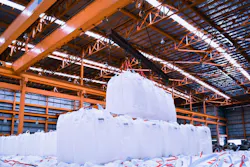
Mobile bulk-handling equipment: Plants on wheels
Stackers, reclaimers, ship loaders and ship unloaders are not vehicles. While they are mobile like cars or trucks, you can’t rely on OEMs to handle the engineering, design, fabrication and commissioning of the equipment.
This practice often leads to poor operation and reliability issues. Instead, the purchasing and operations teams should take an active role in reviewing all equipment details before the OEM begins production.
Without careful planning, process plants often deal with unscheduled shutdowns and repairs on mobile bulk-handling units. Ensuring proper operation can be a painstaking yet necessary process. For instance, it’s important to specify every major item and subsystem of the unit clearly to ensure optimal performance and to include redundancies of critical systems.
The reason is that mobile equipment is often expected to run continuously at its specified capacity with more than 98% availability based on 18-20 hours of daily operation. That’s a demanding target for such complex machinery.

AMT’s Doug Woods: What’s in store at IMTS
In this interview, Woods explains the missions of the association and the exhibition, which is the western hemisphere's largest manufacturing trade show, as well as expectations of what the 2026 IMTS has in store and how to navigate the massive event. Listen below.

Transformation strategy sets the direction, delivery makes it real
Ask a manufacturing general manager whether a clear strategy is essential before investing in digital transformation, and most would answer an emphatic yes. Often, they have a strategy already; a workshop output, a phased roadmap, or an agreed target (such as reducing unplanned downtime by 5%), aligned across production, maintenance, IT and finance.
It’s easy to assume that the hard part is getting the strategy signed off, and transformation is “actually won” in delivery. But that’s only half-right. Even with well-crafted plans, plenty of sites keep operating much as before, which suggests that delivery alone isn’t the answer either.
Strategy and delivery are different disciplines, with distinct skills and you need both for a successful transformation.