Processing's Weekly Mixer: The evolution of pharma process development, and more
Welcome to the latest installment of Processing's Weekly Mixer, which highlights recent content from EndeavorB2B brands relevant to process manufacturers.
This week's entry features content from Pharma Manufacturing, Control, Automation World and Control Design, as well as this week's content from Processing.
Beyond better chemistry: The evolution of pharma process development
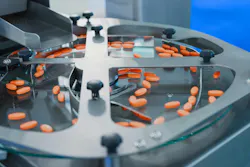
From Pharma Manufacturing: The integration of chemical engineering into process development has transformed how companies scale, control, and optimize manufacturing for a new generation of therapies.
Andy Lundin writes:
Over the past three decades, pharmaceutical manufacturing has undergone a fundamental transformation as chemical engineering became more deeply integrated into process development. In turn, it has changed how manufacturers develop, scale, control, and produce increasingly complex medicines.
That shift in process development has laid the foundation for many of today’s manufacturing advances, including process control, automation, and emerging catalytic technologies such as biocatalysis. While chemistry is central to drug development, it is increasingly the integration of engineering principles that is shaping how modern medicines are manufactured.
Prior to the last 30 years, process development was largely driven from the perspective of synthetic chemists, says Thomas D. Roper, PhD, co-director of pharmaceutical engineering at Virginia Commonwealth University’s Center for Pharmaceutical Engineering and Sciences and graduate program director for chemical and life science engineering.
With more than 30 years of experience in small molecule manufacturing — including 22 years at GSK Pharmaceuticals — Roper said process chemists were primarily focused on designing and optimizing the chemical reaction itself. Once a successful reaction had been identified, comparatively less attention was devoted to the downstream operations that helped determine product quality, manufacturability, and process sustainability.
“The rest of the unit operations, like all the separations, the filtrations, crystallizations, and drying steps were not worked out particularly well, because most chemists would lose interest after the chemistry is over,” Roper said.
Read the entire article HERE.
Alarm management, AI and more with Applied Control Engineering
From Control: In the latest episode of Control Amplified, executive editor Jim Montague spoke to Christopher Hudson, operations manager at independent system integrator Applied Control Engineering.
Listen to the episode below.

Preparing for artificial intelligence: The real question is facility readiness
Artificial intelligence (AI) is becoming one of the most discussed topics in industrial operations, but for many facilities, the practical question is not, “What AI tool should we buy?” The better question is, “Is our facility prepared to use AI in a way that is safe, useful, and provides a positive return on our investment?”
For process controls engineers, plant engineers, maintenance leaders, and operations personnel, AI should not be viewed as a replacement for process knowledge. It should be viewed as an engineering tool that can help facilities make better decisions using the data they already generate. A modern plant produces large amounts of information through PLCs, distributed control systems, historians, lab systems, maintenance systems, production accounting tools, and ERP platforms. The challenge is that this data is often fragmented, inconsistently named, poorly contextualized, or difficult to trust.
AI is only as useful as the data, process understanding, and operational discipline behind it. A model that receives unreliable sensor data, misaligned lab results, incomplete operating context, or poorly maintained asset information will produce unreliable recommendations. Before industrial facilities pursue AI initiatives, they need to establish the fundamentals: trustworthy instrumentation, structured data, secure architecture, clear ownership, and disciplined validation.

The future of global biopharma manufacturing networks
Also from Pharma Manufacturing: Amid ongoing geopolitical uncertainty, regional manufacturing initiatives, and evolving supply chain risks reshaping the pharmaceutical industry, manufacturers are rethinking how biologics are produced and delivered around the world. Rather than relying on centralized production models, many organizations are expanding regional manufacturing footprints and developing more integrated production networks designed to improve resilience, reduce operational risk, and support long-term supply continuity.
In the latest episode of Off Script, Pharma Manufacturing spoke with Jeff Mason, VP and head of the New Jersey Sales Office at Samsung Biologics, about how CDMOs are adapting to this changing landscape. The discussion follows Samsung Biologics establishing its first U.S. manufacturing presence through the acquisition of GSK's biologics facility in Rockville, Maryland, reflecting the broader industry shift toward regional manufacturing capacity.
The conversation explores the growing importance of regional manufacturing strategies, why customers are increasingly seeking manufacturing redundancy from the outset of commercialization, how vertically integrated service models can simplify complex supply chains, and what the next generation of global manufacturing ecosystems could look like as companies balance efficiency with resilience.
Listen to the episode below.
If the shoe fits: sizing motors and drives for your application
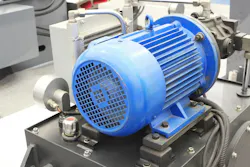
Finding the right size motor could be considered almost like finding the correct pair of shoes. Machines need a motor that fits the application. People need shoes that fit the activity. Thus, what activity is involved in the application of the motor? For instance, if you are playing rugby, you don’t buy sandals.
If you need to flatten 40 tons of metal, then you are not going to swing a hammer, you are going to create a press with hydraulics and some large motors to drive the mill—buy your machine cleats, not sandals.
Since motors are paired with drives, it is easy to size the drive based on the motor size and application. Shoes work better with good socks, right? Then there are other considerations like torque requirements or, say, “traction.” Motor torque usually is an indication to the drive application. Two types of torque are continuous and intermittent. For instance, a runner on the track would just need torque ramping at the start, and then it’s full speed ahead. Those shoes are different than if a rugby or football player needs quick movement and short sprints. A track distance runner would also use lighter shoes. Motor and drive setups can vary like shoe bottoms depending on the torque, speed and acceleration required in an application.