Processing's Weekly Mixer: PFAS in food and beverage, and more

Welcome to the latest installment of Processing's Weekly Mixer, which highlights recent content from EndeavorB2B brands relevant to process manufacturers.
This week's entry features content from Food Processing, Pharma Manufacturing, Control and Plant Services, as well as this week's content from Processing.

PFAS in food and beverage: A rapidly escalating legal risk
Regulators continue to scrutinize the food & beverage industry's use of per- and polyfluoroalkyl substances (PFAS). These substances have been used since the 1950s to keep food from sticking to packaging or cookware, but they do not degrade easily in the environment, nor in the human body.
Current scientific research suggests that exposure to certain PFAS may lead to health risks such as increased risk of some cancers, immune system suppression, developmental & reproductive effects, interference with natural hormones, and increased cholesterol and/or risk of obesity.
The FDA has tested thousands of food samples on the U.S. market for PFAS over the past decade and continues to expand its testing and enforcement footprint. Federal law will require public water utilities to test and publicly disclose regulated PFAS compounds in their water supplies beginning in 2027, increasing litigation risk for companies using such water as an ingredient in their products without filtering for PFAS.
Simultaneously, a fragmented and fast-moving patchwork of state laws and an expanding wave of consumer class actions and recall activity are converting PFAS from a niche environmental compliance issue into a mainstream commercial and litigation risk for entities manufacturing, packaging, importing, or selling food or beverage products.
This article summarizes the current regulatory and litigation landscape while identifying certain legal risks these companies (and the lawyers who advise them on procurement, packaging, and supply contracts) should continue monitoring.

Fragmented biopharma data continues to slow AI adoption
While artificial intelligence (AI) is creating new opportunities across biopharmaceutical manufacturing, challenges related to how manufacturing data is managed and shared are hampering the industry’s ability to scale these technologies.
A new report from Axio BioPharma, AI in Biomanufacturing: The 2026–2029 Outlook, examines the gap between the industry’s growing interest in AI and its ability to integrate these technologies into biologics manufacturing. Though AI adoption across life sciences has accelerated, the report highlights fragmented data, limited interoperability between manufacturing systems and uneven digital maturity as barriers to broader implementation.
“We started out with the report by really wanting to look at what we thought was a pretty simple question: Why are we seeing so much excitement around AI, but here in the biomanufacturing space, we’re not really seeing it scale quite as quickly,” says Justin Byers, founder and CEO of Axio BioPharma.
The report identifies the “multi-party” nature of biologics manufacturing, particularly across sponsor and contract development and manufacturing organization (CDMO) relationships, as a factor contributing to that disconnect.
“When pharma companies work to get their drugs to market, they use quite a large network of manufacturers, testing sites, and that means their data is spread across that network and it becomes fragmented,” says Byers. “You’ve got different systems, different sites, different organizations, and across all those, the same information, the same process parameters, which can be defined or titled in so many different ways, just depending on what organization you’re with.”
International Paper adopts AI-assisted analytics
It’s great to know what you’re looking at and what’s happening, but it’s always better to get those views and context faster.
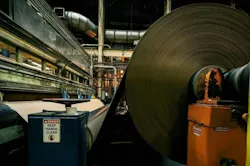
For instance, International Paper in Memphis, Tenn., recently started exploring how its 15 U.S. containerboard mills could migrate from traditional manual reporting and data movement to delivering context-driven and scalable insights.
It began by conducting a trial of Seeq Intelligence software, including some of its most recent, artificial intelligence (AI)-based innovations, such as Agent Q, Agent Builder and Insight Boards to gain insights from its data more quickly, make them more easily available to its users, and scale them out. The trial consisted of an asset health monitoring project that included production areas, sub-areas, instrumentation and other components, and it used principal component analysis (PCA) inputs for anomaly detection.
“We didn’t have a problem. We had an opportunity because we’ve already been using Seeq Workbench software to create analyses, formulas and modeling, as well as reporting that requires data to be moved to Power BI, Organizer and Datalab software to carry out other reporting and presentation functions,” says Cameron Cox, data scientist on International Paper’s cost innovation and remote analytics team, which supports the company’s more than 400 manufacturing facilities and approximately 37,000 employees worldwide. Cox presented “Two paths to automated reporting: Insight Boards and Agent Builder reports” at Seeq’s Conneqt 2026 event earlier this year. “The opportunity was to keep further insights within Seeq, retain its trusted analyses, and perform fewer data movements, but still be able to provide different insights for different audiences without duplicating efforts, whether it’s looking at one mill or 15 plants.”
Ask a Plant Manager: Rethinking maintenance budgets, backlogs and spare parts

Recapping the week on Processing
Articles
What PACK EXPO exhibitors are saying about the challenges facing processors in 2026
How magnetic level technology enhances safety across critical processes
Blue-White 2-Series metering pumps debut at WEFTEC 2026
Beyond detection: Building a defensible inspection program
Previewing Pack Expo International 2026 with Doan Pendleton of Vac-U-Max
Podcast
The importance of effective sealing around instrumentation in today's digitalized oil and gas plants